



① Quick Answer
CHIRP is a free, cross-platform open-source software application that allows telecommunications managers and fleet buyers to configure memory channels, frequency offsets, and squelch tones across hundreds of analog and digital two-way radios. Using CHIRP's clone architecture, an experienced technician can program 30 to 50 handheld transceivers per hour from a single master profile—reducing setup time by over 80% compared to error-prone manual keypad entry (which averages 8 to 10 minutes per unit). For enterprise deployments exceeding 50 units, sourcing commercial fleets with turnkey factory pre-programming from QYT Electronics eliminates local software setup, driver incompatibilities, and channel entry errors entirely.
② Key Takeaways
- Multi-Brand Hardware Compatibility: CHIRP supports extensive commercial and amateur transceiver models from manufacturers including QYT, Baofeng, Kenwood, and Icom via standard USB-to-serial interface cables.
-
Master Profile Cloning Efficiency: Technicians create one validated master configuration file (
.img), verify channel bandwidth and CTCSS/DCS sub-tones, and upload it across identical fleet models in 60 to 90 seconds per unit. - Keypad Entry vs. Software vs. Factory Pre-Set: Manual keypad programming averages 8–10 minutes per radio with high human error rates; CHIRP averages 1–2 minutes per radio; QYT factory pre-programming delivers 0-minute deployment directly out of the shipping crate.
- Regulatory Compliance & Channel Spacing: Transmitting on business frequencies requires authorized national licensing (such as FCC Part 90 in the US or CE RED in Europe); commercial channels must adhere to mandatory 12.5 kHz narrowband emission masks.
- Turnkey Factory Pre-Programming by QYT: QYT Electronics configures customer-supplied frequency tables, discrete sub-audible privacy codes, and OEM branding directly at the factory, covered by a 1-year unit warranty, 6-month accessory warranty, and lifetime remote engineering support.
③ Core Technical Guide (Google PAA Search Intent)
What Is CHIRP and Which Radios Does It Support?
Conclusion: CHIRP is an open-source, community-maintained third-party radio programming tool that replaces proprietary, single-model manufacturer software with a unified graphical interface for Windows, macOS, and Linux. While QYT factory mass production utilizes dedicated industrial automated flashing jigs and provides official proprietary Customer Programming Software (CPS) on its website, CHIRP remains the most popular multi-brand field utility for fleet managers.
Technical Evidence & Compatibility: Maintained under open-source licenses, CHIRP interfaces with radio microcontrollers via Serial Communications Interface (SCI) protocols over universal asynchronous receiver-transmitter (UART) chipsets. The software supports over 100 radio platforms spanning VHF (136–174 MHz) and UHF (400–512 MHz) spectrums, including:
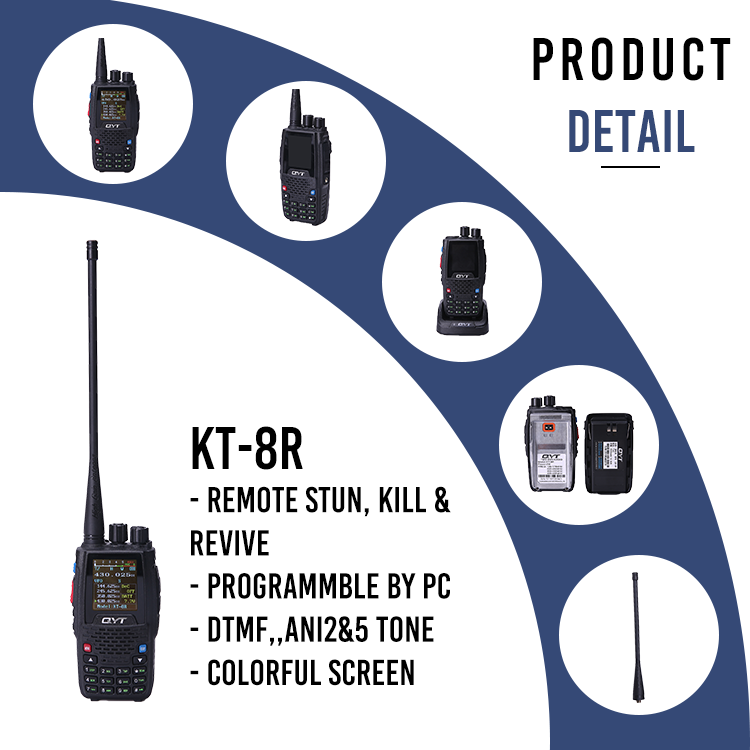
- QYT Mobile & Handheld Platforms: Natively supports popular QYT transceivers including the QYT KT-8900, KT-8900D, KT-8900R, KT-7900D, and KT-8R series, as well as K-plug compatible analog commercial handhelds.
- Legacy Commercial Architectures: Compatible with standard Kenwood (TK-series), Baofeng, Wouxun, and select Icom and Yaesu analog transceivers.
- Manufacturer CPS vs. Open-Source CHIRP: For single-model in-depth configuration, QYT provides model-specific official CPS packages on its official download center. However, for telecom managers handling mixed fleets of different brands, CHIRP allows copying, pasting, and managing channel tables across multiple vendor hardware platforms within a single spreadsheet view.
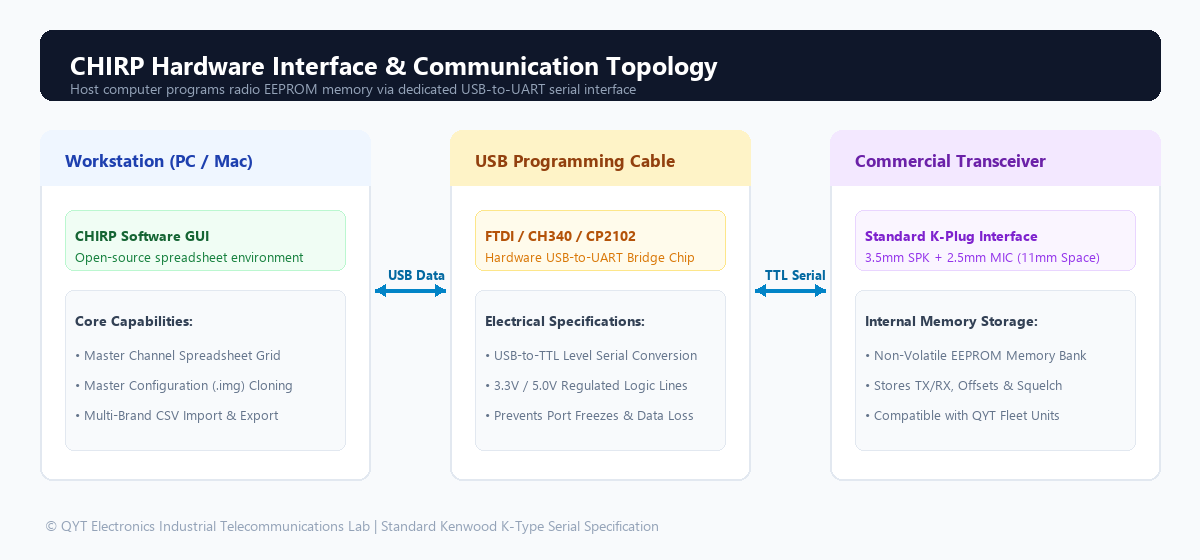
Diagram: Workstation communicates with the radio microcontroller EEPROM via an industrial USB-to-UART bridge cable (FTDI/CH340/CP2102) utilizing the standard Kenwood 2-pin accessory connector.
When evaluating equipment for large organizations, exploring the QYT Professional Two-Way Radio Catalog allows procurement directors to source commercial radios equipped with industry-standard 2-pin programming interfaces and factory programming support.
How Do I Batch-Program 50 Walkie Talkies with CHIRP?
Conclusion: Batch-programming fleet radios with CHIRP requires establishing a single verified master image, followed by sequential upload cycles using the Clone command.
Step-by-Step Field Execution Guide:
- Hardware & Driver Connection: Connect a dedicated USB programming cable featuring an authentic FTDI or CH340 UART bridge to your workstation. Connect the 2-pin K-type plug firmly into the microphone/earpiece port of the "Master Radio."
-
Download Initial Memory Image:
- Power on the transceiver and set volume to 50%.
- In CHIRP, navigate to Radio -> Download From Radio.
- Select the appropriate COM Port, Vendor (e.g., QYT), and specific Model.
-
Click OK to pull the factory memory structure into CHIRP. Save this pristine file as
Factory_Default_Backup.img.
-
Configure Fleet Channel Parameters:
- Populate the channel grid with your licensed transmit (TX) and receive (RX) frequencies.
-
Set Duplex (none for simplex direct communication,
+or-for repeater pairs). - Specify Offset Frequency (typically 5.0 MHz for commercial UHF repeaters, 0.6 MHz for standard VHF repeaters).
-
Define Mode as
NFM(Narrow FM, 12.5 kHz bandwidth) to comply with regulatory narrowbanding mandates. -
Assign distinct alphanumeric channel labels (e.g.,
GATE-1,SECURITY,LOGISTICS,EMERGENCY).
-
Configure Squelch Tones (CTCSS/DCS): Set Tone Mode to
TSQL(Tone Squelch) and assign matching sub-audible frequencies to filter co-channel traffic. -
Save Master Fleet Template: Save your finalized configuration as
Fleet_Master_2026_RevA.img. - Execute Sequential Batch Uploads:
- Disconnect the master radio; connect Unit #2 and power it on.
- Navigate to Radio -> Upload To Radio.
- Verify upload progress bar completes (typically 15 to 30 seconds).
- Power off Unit #2, apply a verification inspection label, and connect Unit #3. Repeat this workflow across all 50 units.
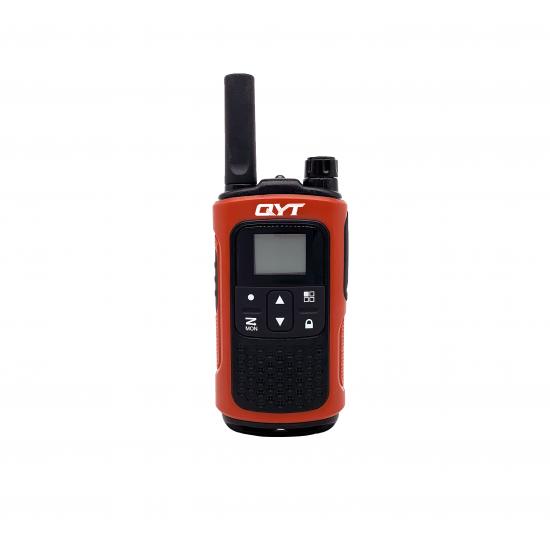
Product Reference: The QYT AH-P4 commercial handheld series features standard 2-pin accessory connectors, supporting both open-source CHIRP workflows and dedicated factory automated frequency programming.
Product Showcase: The QYT KT-8R is a flagship self-developed multi-band handheld transceiver featuring a color LCD display, quad-standby receiver architecture, and a standard Kenwood K-plug 2-pin interface. Natively supported by the open-source CHIRP platform, the KT-8R represents QYT's proprietary engineering excellence in flexible field configuration and factory automated pre-programming.
What Is the Difference Between Factory Pre-Programming and CHIRP?
Conclusion: While CHIRP is an excellent field maintenance tool for small teams and post-deployment frequency adjustments, QYT factory pre-programming operates on industrial automated hardware jigs during assembly, delivering zero labor cost, zero defect rates, and instant operational deployment for bulk procurement.
Operational Comparison & Procurement Analysis:
- Industrial Flashing Jigs vs. PC Serial Cables: QYT factory mass production does not use CHIRP or standard desktop PC software. Instead, production lines utilize multi-unit automated flashing fixtures (jigs) that program firmware and memory channel tables simultaneously across production panels in seconds, coupled directly to digital communications analyzers for real-time RF verification.
- Labor Overhead & Deployment Time: Self-programming 100 radios in-house using CHIRP or desktop CPS requires connecting, reading, writing, and testing every device sequentially. Even at 1.5 minutes per unit, this consumes over 2.5 hours of dedicated technical labor, excluding troubleshooting driver errors or bad cable pins. Factory pre-programming arrives ready to power on out of the crate.
-
Firmware & MCU Variation Risks: Commercial radios frequently undergo internal microcontroller (MCU) board revisions during regular production runs. Third-party open-source software like CHIRP may fail to recognize a brand-new MCU revision, throwing
"Radio refused to send block"or bricking errors. QYT factory engineers utilize direct firmware flashing tools tailored precisely to the production batch's hardware version. - Error Containment: In-house manual data entry across multiple spreadsheets risks inverted TX/RX offsets or mismatched CTCSS decode tones. Factory automated test jigs verify output power, frequency stability, and squelch sensitivity across all programmed channels simultaneously on a radio communications analyzer.
How Do I Set CTCSS/DCS Privacy Codes for a Fleet?
Conclusion: CTCSS and DCS are sub-audible tone filtering protocols that prevent radios from opening squelch on unwanted co-channel chatter; they segregate departmental talkgroups but do not encrypt voice transmissions.
Engineering Principles:
-
CTCSS (Continuous Tone-Coded Squelch System): Transmits an analog sub-audible sine wave (ranging between 67.0 Hz and 254.1 Hz) alongside voice audio. A receiving radio set to
TSQLwill keep its speaker muted until it detects the matching tone frequency. -
DCS (Digital-Coded Squelch): Transmits continuous low-speed digital sub-audible frequency-shift keyed data (typically standard 83 or 104 octal Golay codes such as
D023N). DCS provides sharper squelch gating and resists false triggering from commercial electrical equipment.
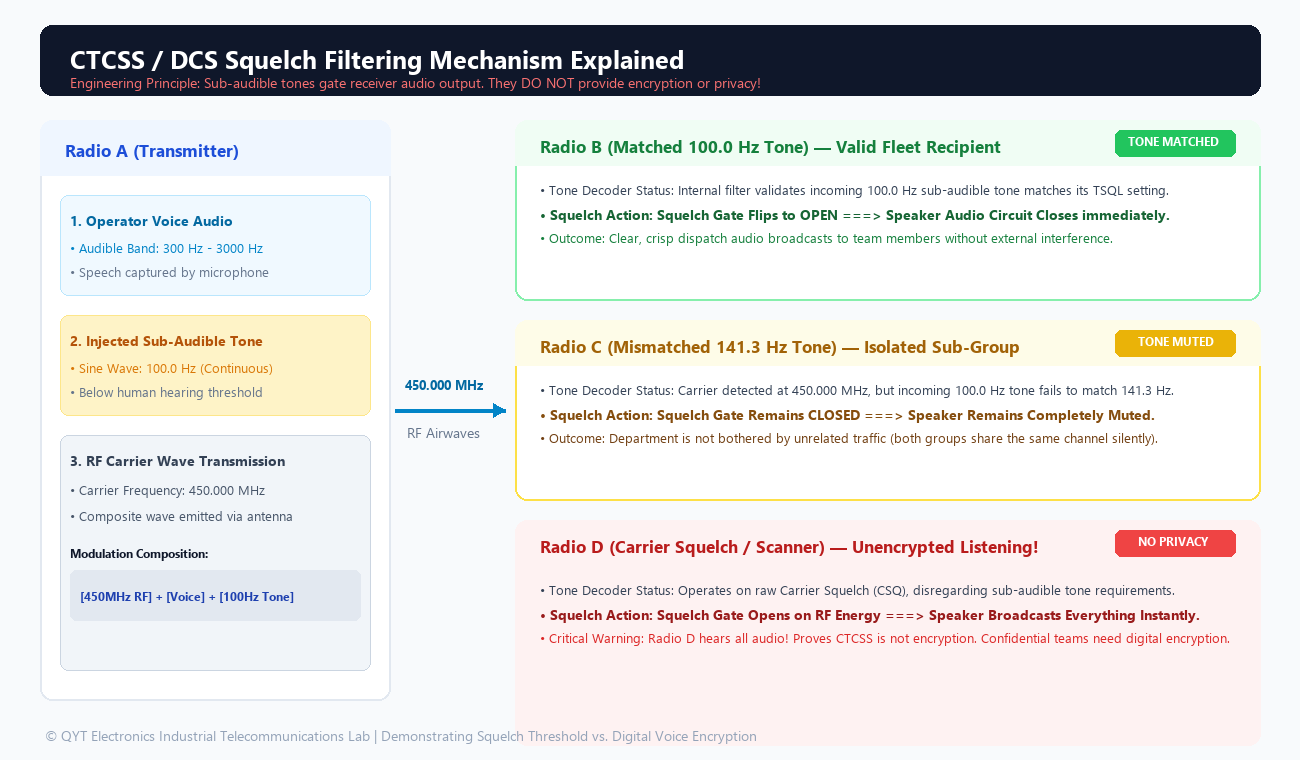
Mechanism Diagram: CTCSS/DCS sub-audible tones serve solely as a receiver squelch gate to eliminate co-channel annoyance. Radios operating on carrier squelch (like Radio D) hear all voice audio, proving that tone squelch does not provide voice encryption.
Critical Security Notice: As demonstrated above, any standard radio without tone squelch (carrier squelch mode) or with a frequency scanner can hear all transmissions. For operations requiring confidential voice communication, procurement teams should consult QYT Custom OEM Engineering Services to explore hardware digital encryption options.
What Channel Plan Should I Use for a 100-Person Security and Operations Team?
Conclusion: A 100-person enterprise facility should establish a structured 8- to 16-channel matrix segregating administrative, operational, logistics, and emergency traffic.
Standard 16-Channel Enterprise Allocation Matrix:
④ Data Comparison: Programming Method Evaluation & Enterprise Checklist
Evaluating fleet programming options highlights stark differences in throughput, labor overhead, and operational risk:
Enterprise Pre-Programming Checklist for B2B Buyers
Before finalizing your fleet purchase order with QYT, complete this pre-flight technical checklist:
- 1. Spectrum License Verification:Have you obtained official regulatory approval for your operating frequencies (e.g., FCC Part 90 license, CE RED commercial UHF allocation)?
- 2. Channel Frequency Chart Creation:Formulate your exact TX and RX frequencies in an Excel or CSV spreadsheet. For simplex operations, ensure TX and RX frequencies are identical.
- 3. Repeater Offset & Tone Specification:If utilizing repeaters, clearly specify exact transmit shift offsets (+/- MHz) and input/output sub-audible tones (CTCSS/DCS).
- 4. Bandwidth Designation:Confirm whether channels should be burned inNarrowband (12.5 kHz)orWideband (25.0 kHz)according to your jurisdiction's wireless rules.
-
5. Alphanumeric Channel Labeling:Define 6- to 10-character display tags for each channel (e.g.,
GATE-01,SUPV,FIRE) to streamline crew operation. - 6. Custom OEM Branding Requirements:Specify private-label silk-screen logos, custom model serial badges, and bespoke packaging boxes.
⑤ Real-World Commercial Case Studies
Case Study 1: Regional Security Contractor's Manual Programming Failure (Lessons Learned)
- Client Profile: A commercial security provider in Leeds, United Kingdom, managing access control for regional sports venues and logistics warehouses.
- The Problem: The company purchased 30 unprogrammed commercial handheld radios for an urgent event. To save time, two field supervisors attempted manual keypad programming on site. Due to rushing under ambient noise, one supervisor entered standard 25 kHz wideband deviations while the other inverted the CTCSS receive tone frequencies on 12 units. When deployed, security personnel experienced severe audio cutouts and missed critical dispatch calls during a stadium gate emergency.
- The Corrective Solution: The contractor transitioned to QYT fleet equipment. For subsequent deployments, the enterprise supplied its authorized Ofcom channel plan directly to QYT engineers.
- The Operational Result: All replacement radios arrived factory pre-programmed, fully labeled, and pre-tested. Fleet deployment time on site dropped from 4 hours of chaotic troubleshooting down to zero minutes, with 100% communication reliability achieved across all event gates.
Case Study 2: International Cruise Line Fleet Deployment (40+ Hours Saved)
- Client Profile: A premier Mediterranean cruise ship operator upgrading onboard engineering, housekeeping, and deck management communications across a 2,200-passenger luxury vessel.
- The Problem: Upgrading the vessel's communications required provisioning 150 rugged waterproof handheld radios. Performing in-house CHIRP programming on board was estimated to require over 40 technician hours—diverting marine telecom engineers from critical navigation radar maintenance during port turnover.
- The Solution: The client ordered QYT AH-UV8 IP67 Dual-Band Radios with turnkey factory pre-programming. QYT engineers loaded the ship's 16-channel maritime communications matrix (including dedicated bridge UHF channels, engineering frequencies, and private DCS codes) prior to international air freight shipment.
- The Operational Result: The entire 150-unit radio fleet was unboxed, battery-inspected, and issued to crew members within 90 minutes of dockside arrival. Factory pre-configuration saved over 40 hours of technical labor and ensured zero cross-channel interference during vessel docking maneuvers.
⑥ Frequently Asked Questions (FAQ)
What is CHIRP software for walkie talkies?
CHIRP is a free, open-source computer application used to program two-way radios. It runs on Windows, macOS, and Linux, allowing users to enter frequencies, channel names, and squelch tones in a spreadsheet interface and upload them to supported radios using a USB programming cable.
How do I program multiple walkie talkies at once?
To batch-program multiple walkie talkies with CHIRP, connect a master radio, configure your channel table, and save a master configuration file (.img). Then, sequentially connect each fleet radio, power it on, and execute the "Upload To Radio" command to clone the identical profile in 60 to 90 seconds per unit.
Can I program a walkie talkie without a computer?
Yes, radios with full DTMF keypads and display screens support front-panel programming (FPP). However, manual keypad programming is slow (8 to 10 minutes per radio) and error-prone. Computer programming via CHIRP or turnkey factory pre-programming is strongly recommended for commercial fleets.
What is factory pre-programming for two-way radios?
Factory pre-programming is an OEM manufacturing service where QYT flashes your authorized frequency plan, CTCSS/DCS privacy codes, channel labels, and power settings directly into the radios during production. Units arrive pre-configured, tested, and ready for immediate deployment out of the shipping crate.
How do I set privacy codes (CTCSS) on a walkie talkie?
In CHIRP, set the "Tone Mode" column to TSQL (Tone Squelch) and select your desired sub-audible tone frequency (e.g., 100.0 Hz) from the dropdown menu. This ensures your radio's speaker only unmutes when receiving transmissions accompanied by that specific sub-tone, filtering out unwanted channel chatter.
Does QYT use CHIRP software in factory production?
No. QYT utilizes industrial automated multi-unit flashing fixtures and digital radio communication analyzers during factory assembly, ensuring calibrated RF output and zero-defect batch programming. For post-sale customer maintenance, QYT provides official proprietary Customer Programming Software (CPS) on its website, while CHIRP remains a widely supported third-party open-source tool for field technicians managing multi-brand fleets.
Streamline Your Fleet Deployment with QYT Factory Engineering
Managing radio configuration shouldn't consume your technical team's valuable hours. Whether you require high-power UHF transceivers for industrial logistics, rugged IP67 waterproof radios for maritime shipping, or specialized dual-band fleets, QYT Electronics provides comprehensive hardware manufacturing and turnkey pre-programming support:
- Factory-Direct Pricing: Eliminate wholesale middleman markup with direct manufacturer supply agreements.
- Complimentary Factory Pre-Programming: Submit your frequency charts; QYT burns custom channels, alphanumeric tags, and CTCSS/DCS tones prior to packaging.
- OEM Customization & Branding: Silk-screen private labeling, custom serial number badges, and bespoke commercial retail packaging.
- Global Export Clearance Documentation: Comprehensive compliance documentation provided including CE, FCC, RoHS, and MSDS battery shipping certificates.
- Comprehensive Warranty: 1-year transceiver body warranty, 6-month accessory warranty, and lifetime English remote engineering technical support.
Ready to order factory pre-programmed radios for your commercial fleet? Contact the QYT Technical Sales and Engineering Team to discuss channel specifications, evaluation samples, and global wholesale logistics.